GenAI e din 2022 cu noi, e clar, nu mai e scăpare. Și dacă tot se vorbește de Claude / Anthropic în contextul code vibing, de ce să nu dăm viață nouă vechilor noastre laptop-uri?
Pentru mine, GenAI a reprezentat și încă reprezintă o oportunitate de continuous learning. Așa am început, în decursul anului trecut, să „butonez” în Python cu ajutorul lui Claude. Am învățat din greșeli, am „vibrat” cu codul. Și am făcut o mică aplicație ce este folosită în prezent în producție.
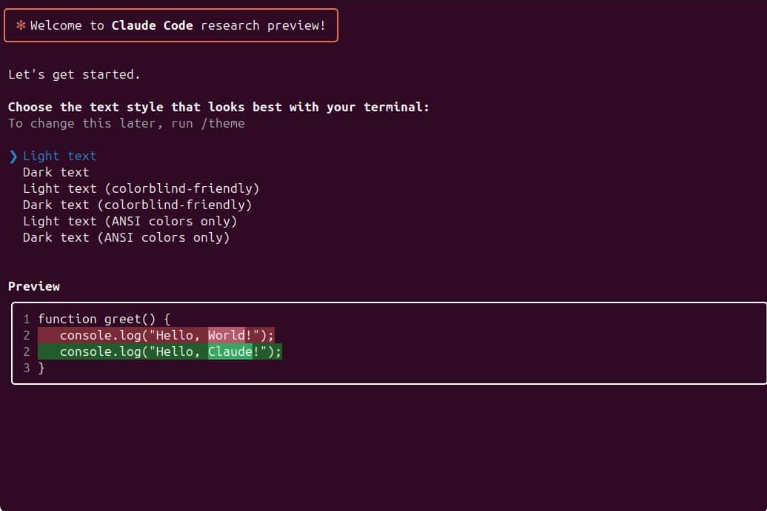
Am discutat cu un bun și vechi prieten de-al meu despre diferitele moduri de prezentare ale lui Claude: desktop, browser, browser-plugin, CLI, VS Code add-on etc. Fiecare cu preferințele lui. Recent, pentru că doresc să continui cu „vibratul” în cod, am decis să instalez Claude Code pe un laptop vechi (Windows).
Am ales un Ubuntu 24.04.3 LTS amd64 (Desktop). Instalarea a decurs fără probleme (am șters Windows și am lăsat configurația implicită pentru instalarea Ubuntu); iată și specificațiile hardware:
CPU: Intel i3-5010U (2015, gen. 5), 2 cores, 4 threads @ 2.10 GHz, 3 MB cache, Intel HD Graphics 5500 integrat RAM: 4 GB, upgrade la 16 GB (!!!) – atât cât mi-a permis placa de bază HDD: 457 GB disponibili, 12 GB folosiți
De reținut: verifică compatibilitatea laptop-ului cu Ubuntu și cu Claude Code înainte să începi proiecte de dezvoltare aplicații. Pentru laptop-ul meu ar fi fost ideal un CPU de generație mai recentă (>2020) și minim un i5.
Dar e bine și așa — am făcut 10 agenți (Agentic AI for Coding Environment) și am adăugat și câteva „skills” – competențe. Despre aceștia / acestea, cu altă ocazie. Odată ce laptop-ul e pregătit, iată secvența comenzilor pentru pregătire / instalare Claude Code:
# actualizează sistemul de operare:
sudo apt update && sudo apt upgrade -y

# Instalează Node.js (minim 18) și npm:
# 1. Șterge versiunea veche de Node.js (opțional)
sudo apt remove nodejs npm

# 2. Instalează Node.js 20.x (LTS din 2025)
curl -fsSL https://deb.nodesource.com/setup_20.x | sudo -E bash -
sudo apt install -y nodejs

# 3. Verifică instalarea / versiunea
node --version   # Ar trebui să fie v20.x.x
npm --version    # Ar trebui să fie 10.x.x sau mai recent

# 4. Configurează npm pentru pachete globale în directorul tău de utilizator
mkdir -p ~/.npm-global
npm config set prefix ~/.npm-global

# 5. Adaugă în PATH
echo 'export PATH=~/.npm-global/bin:$PATH' >> ~/.bashrc
source ~/.bashrc

# 6. Instalează alte programe dependente
sudo apt install -y git ripgrep

# 7. Instalează Claude Code
npm install -g @anthropic-ai/claude-code
Notă importantă: nu folosi sudo la instalare; dacă întâmpini probleme cu permisiunile, revizitează pasul 4 de mai sus.
Autentifică-te cu contul tău Anthropic:
# Navighează în directorul proiectului tău (sau al proiectelor):
cd proiectul-tău-software

# Pornește Claude Code
claude
Although we primarily associate the Agile concept with software developers, SCRUM masters, Product Owners, etc., this book is intended for any professional who works with other people, regardless of industry or sector. Here, we extend Agile beyond its software roots and explore it as a human-centric mindset—a way of thinking that can elevate any team’s effectiveness.
To answer the question “What makes or breaks a team?”, we should consider several variables such as individuals’ personality, motivation, mindset, goals, values, level of expertise, professional and personal experience, and education.
Intuitively, we know there is a relationship between these variables and the performance of individuals in a group. People are exposed to group interaction from infancy: family, extended family, friends, classmates, teammates, etc. We gradually develop abilities to overcome and achieve whatever is presented in front of ourselves. Working with people to reach a goal is not uncommon. And in order to achieve some of these shared goals, we often need to rely on others and this is a challenge in itself.
Individuals negotiate change in distinct ways. When confronted with the same type of transition, our responses can vary significantly. Frequently, change is viewed as a challenge—both professionally and personally.
Generations of professionals come and go, leaving their mark on how individuals come together to achieve goals and how to overcome challenges. The workplace changed significantly over the last 3-4 decades, the main reasons being the fast-paced technological development, the natural rhythm of life and the continuous change that is inherent to it. If there is something that suffered little to no change is the fact that companies exist to make profit for their shareholders, and some of the fundamental values of humanity.
The introduction’s question yields various answers. In the context of an effective team, we emphasize nine fundamental values that underpin effective teamwork:
Fundamental value
What is
Benefit
How to achieve
Respect
The consideration and appreciation of the needs, interests, opinions and feelings of others.
Build healthy and harmonious relationships with others, foster cooperation and understanding, and promote equality and justice.
Actively listen to others, treat people with kindness and courtesy, recognize and appreciate cultural and social differences, and be considerate of others’ opinions and feelings.
Honesty
The integrity and sincerity in people’s actions and relationships.
It helps people build trusting relationships and foster credibility and transparency in their social interactions.
Tell the truth at all times, take responsibility for one’s actions and decisions, do not lie or mislead others, respect confidentiality and privacy.
Solidarity
It is about collaboration and mutual support among people.
It helps people overcome adversity and face life’s challenges together.
Helping others in times of need, being empathetic and sympathetic to the struggles of others, working as a team to achieve common goals, and being an advocate for social justice and equality.
Responsibility
The ability to assume the consequences of one’s actions and decisions, and to take action to correct any mistakes or problems one may have caused.
It helps people develop a strong work ethic and become responsible and committed citizens.
Fulfilling one’s obligations and commitments, admitting mistakes and learning from them, taking action to correct any damage we have caused, and being a responsible and ethical leader.
Empathy
It is the ability to put oneself in the shoes of others and to understand their feelings and perspectives.
It helps people develop healthy and meaningful relationships with others, foster understanding and compassion, and build more inclusive and just communities.
Through active listening, asking open-ended questions, putting oneself in the other person’s shoes, validating others’ feelings, practicing in everyday situations, volunteering and reading literature/movies that explore different perspectives.
Gratitude
It is recognizing and valuing the positive things one has in life and expressing one’s appreciation for them.
It helps people develop a more positive and optimistic outlook on life, cultivate healthier and more meaningful relationships, and improve one’s emotional and mental well-being.
Expressing gratitude to the people around oneself, focusing on the positive things in life, remembering happy and rewarding moments, and finding ways to give back and contribute to one’s community.
Tolerance
It refers to accepting and respecting the differences of others, whether in terms of culture, religion, race, gender, sexual orientation, etc.
It helps people to foster inclusion and diversity, to overcome prejudice and discrimination, and to build more harmonious and equitable communities.
Learning about different cultures and perspectives, respecting the beliefs and opinions of others, avoiding stereotypes and discrimination, and promoting equality and social justice.
Generosity
Sharing and giving selflessly to others, whether in terms of time, money, resources.
It helps people to develop an attitude of service and collaboration with others, to foster compassion and empathy, and to contribute to the well-being of our community and society in general.
Donate to charities and charitable organizations, offer help and support to others, share one’s time and skills with those in need, and foster a culture of service and collaboration.
Self-discipline
It refers to the ability to control one’s actions and decisions, and to maintain a constant and consistent focus on one’s objectives and goals.
It helps people develop a strong work ethic and achieve success and well-being in their lives.
Setting clear goals and objectives, maintaining a schedule and calendar of activities, avoiding procrastination and distraction, and working hard and persevering in achieving one’s objectives.
Which one of the above values takes precedence and when? Are they interrelated and intertwined to a point where a distinction is no longer necessary, but their synergy is? Last but not the least, which one is the hardest to achieve and maintain? We will reference these values as we take a closer look at the characteristics of an effective team throughout this book.
Let us not forget about companies striving to generate profits. This, in my opinion, has the one of the biggest impacts on how employees interact, come together by bringing their individuality (qualities and flaws alike) and become an effective team. The higher an individual is in the employees’ hierarchy (and thus becoming more interested in achieving the financial goals), the more he/she will distance himself/herself from the daily challenges of a team. Pursuing financial results (i.e. profit) may not fully convey into teams becoming or being effective.
And therein lies the dilemma: what should we throw in the mix to create an effective team?
A mindset is a specific set of beliefs and attitudes one holds about a particular situation or challenge. Regardless of our previous experiences, every time we enter a working environment we are faced with new situations and challenges. It is true that some of these experiences are transferable and help us shift our mindsets. Minds can be trained to become more flexible and can change with conscious effort and new experiences.
“Agile is a mindset defined by values, guided by principles and manifested through many different practices. ”Being” Agile is the correct way to implement Agile: it starts with internalizing the agile mindset, then using that understanding to select and implement the correct practices, tailoring them to different situations as needed.” – PMI-ACP Exam Prep (Chapter 1, page 24), Mike Griffiths.
Is the Agile Mindset part of the mix? Should we consider Agile Team Management as an alternative to existing traditional management styles?
Not in the least, the Agile Mindset (or the agile way of thinking) is not a matter of adopting some practices, we actually have to own and become the Agile Mindset and use it to guide our approach.
More than ever, innovation is key and triggers new experiences. From industrial (results: products) to knowledge work (results: products and services), we benefit from innovation and use new/emerging technologies to accomplish work tasks.
Industrial work
Knowledge work
Work is visible
Work is invisible
Work is stable
Work is changing
Emphasis is on running things
Emphasis is on changing things
More structure with fewer decisions
Less structure with more decisions
Focus on the right answers
Focus on the right questions
Define the task
Understand the task
Command and control
Give autonomy
Strict standards
Continuous innovation
Focus on quantity
Focus on quality
Measure performance to strict standards
Continuously learn and teach
Minimize cost of workers
Treat workers as assets, not as costs
One may notice that traditional team management offsets to the column on the left. The struggle is real: services (obtained through knowledge work) have been “industrialized” and sold as products primarily with profit in mind; subsequently, it only seemed natural to emulate the team management used in factories and perpetuate it in corporate workplaces.
A team which accomplishes (complex) knowledge work projects would not be fit for a rigid, corporate (industrial) team management style. To put it bluntly, a manager has to step out of the way, to let team members innovate, create, implement, fail, change, and repeat. All of these, and also keeping a practical (and pragmatic) stance. The manager should serve the team and its objectives, removing all obstacles preventing the team to achieve an infinite sustainable work rhythm.
Before attempting to instill an Agile Mindset and transform professionals into effective teams, we should answer the following: is it possible to disrupt the corporate mindset and enhance (replace) it with the Agile one?
We are directly influenced by the working environments we experience throughout our professional lives. Mindsets react and adjust to work-related challenges, shaped by our need to belong and be accepted by our peers. This creates both a challenge and an opportunity – while organizational cultures can reinforce traditional thinking, they can also be deliberately shifted when people see their contributions recognized and their values reflected in the team.
The questions raised in this introduction—and many more—will be explored through concepts, perspectives, and examples throughout the chapters ahead. The aim is not to prescribe one definitive answer, but to offer insights that help readers form their own understanding of what makes a team truly effective.
This work draws on two primary references: PMI-ACP Exam Prep by Mike Griffiths and Effective Leadership by Robert Lussier and Christopher Achua. Additional, specific references are cited as needed.
AMC când cetățeanul nu înțelege proprietatea privată
Întâmplarea face să stau într-un bloc cu 5 apartamente. Nu știu care e termenul corect, are doar 2 etaje. Bloc să fie. Fiecare apartament are un loc de parcare. Privat. Intrarea pe alee e privată, terenul la comun e privat. Practic, proprietate privată.
Bazele legislative:
Legislația română definește proprietatea privată prin Codul Civil (art. 555), care stipulează că este dreptul de a poseda, folosi și dispune de un bun în mod exclusiv, absolut și perpetuu, în limitele legii. Aceasta este garantată și ocrotită de Constituție (art. 44).
Dacă cineva pătrunde fără drept în locuința ta sau în alte spații împrejmuite de aceasta, se încadrează în articolul 224 din Codul Penal (Violarea de domiciliu) și poate fi pedepsit cu închisoare sau amendă. Poți depune o sesizare la poliție.
Parcarea e cu acces direct din stradă, nu există trotuar. Așa a fost gândită de constructor și aprobată de Primărie. Când vin acasă, intru direct din stradă în parcare. Lipită de clădire, de calea de acces la casa scării. Parcarea e împrejmuită de 3 laturi. A 4-a nu e, că, deh, acces.
Vin alți șoferi care se parchează în spațiile private de parcare. Am avut un semn spre informare, degeaba. Fără semn, nu are rost. E Vestul Sălbatic.
Le spui: „e parcare privată, mutați-vă mașina”. Răspuns (cel mai adesea bodogănit): „doar 5 minute”.
Și ne mai întrebăm de ce merg lucrurile simple prost în România. De cele complicate nu are rost să vorbim. Am spus-o și o spun mereu: să luăm cele bune de la alte țări, să scăpăm de cele (obiceiuri) proaste. Nu (mai) merge cu o spoială îndoielnică și cu lucrul de mântuială.
Avem o aversiune față de lege și ordine. Nu ne place. Ne place, în schimb, să: „lasă că ne-am descurcat și de data asta”. Șmechereală. Șmenuială.
Tăcerea perpetuează păstrarea obiceiurilor proaste, lipsa bunului-simț. Dacă deschizi gura să îți protejezi drepturile, nu e bine. Că „doar 5 minute”. Ce atâta caz?
Pe de altă parte, pot fi și înțelegător. De multe ori nici nu îmi bat capul să le atrag atenția, că pleacă rapid. Unii își dau seama că sunt pe proprietate privată, alții își termină repede treaba. Sau se parchează pe spațiul public.
Uneori nu mai pot să tac. Nu mai pot tolera nesimțirea. Nu mai vreau să accept toate rahaturile făcute de conaționali. E adevărat că peștele de la cap se împute, asta nu înseamnă că schimbarea nu poate fi bidirecțională.
Noi toți ar trebui să dăm un exemplu când suntem în societate. Respect față de sine, față de ceilalți. Și față de proprietatea privată.
Cabinetul medical individual sau clinica medicală privată sunt forme prin care se prestează servicii medicale – consultații, controale, intervenții. Medicul își desfășoară activitatea profesională concentrându-se asupra pacientului, însă timpul este adesea o constrângere. De multe ori, recepția unei clinici și cabinetele sunt supuse unui du-te-vino constant, uneori copleșitor.
📄 Organizarea activității și păstrarea documentelor medicale
Fiecare unitate medicală are o organizare internă, iar o parte importantă din aceasta este fluxul documentelor medicale și non-medicale.
În România, perioada de păstrare a documentelor pe hârtie în domeniul medical este reglementată de mai multe acte normative:
📁 Perioada minimă generală: 5 ani;
🔐 Date cu caracter personal (GDPR): trebuie păstrate doar atât timp cât este necesar scopului pentru care au fost colectate;
🗂️ Arhivare: obligatorie, fizic sau digital, cu evidențiere în registre.
Este esențial ca fiecare cabinet și clinică să fie certificate GDPR și să gestioneze corect arhiva documentelor.
💻 Soluții moderne: digitalizarea fluxului de pacienți și documente
Digitalizarea fluxului de preluare a pacienților, a generării și captării semnăturilor pentru documente medicale (consimțământ sau acord pacient informat, acord GDPR, etc.), integrată cu programările și fișele de observație – permite gestiunea completă a pacienților într-o platformă unică și sigură.
⚙️ De ce să alegi un SaaS medical?
Există soluții la cheie, de tip SaaS (software as a service), cu abonamente flexibile, adaptate nevoilor fiecărei unități medicale. Avantajele sunt semnificative:
✅ Flexibilitate în integrarea propriilor documente sau formate personalizate;
🔍 Căutare rapidă prin cele 999 coduri de diagnostic, direct din fișa de observație medicală;
Pentru a scurta timpul petrecut în activități administrative și pentru a optimiza actul medical, adoptarea unui SaaS medical specializat este nu doar utilă, ci esențială.
Astfel, personalul medical își poate dedica timpul esențial actului medical, crescând calitatea acestuia și satisfacția pacientului.
🔗 Soluția noastră: MediConsent®
Dacă ești medic, administrator de clinică sau manager de rețea medicală și vrei să digitalizezi fluxurile interne, noi te putem ajuta.
MediConsent® e ușor de folosit având un meniu intuitiv, fără complicații. Fluxuri dedicate pentru recepție/asistent, doctor sau administrator. Simplu.
➡️ Află mai multe despre soluțiile noastre de digitalizare pentru cabinete și clinici pe: 👉 https://adriantunei.com
Există mai multe portaluri cu domeniul .ro (ccTLD) care adună și colectează informații despre firme.
Ce este acceptabil
Consultarea datelor pentru informare (de exemplu, cu cine urmează să închei un contract).
Folosirea datelor doar în scop B2B, fără contact agresiv sau automatizat.
Utilizarea datelor în baza unui temei legal clar (consimțământ, interes legitim bine definit, obligație legală etc.).
Ce este riscant/ilegal
Contactarea persoanelor fizice (asociați, administratori) prin numere sau adrese de e-mail personale obținute indirect.
Trimiterea de comunicări comerciale nesolicitate (e-mail, SMS, WhatsApp) fără consimțământ clar.
Automatizarea contactului (de exemplu, roboți sau scripturi care trimit în masă) – încalcă nu doar GDPR, ci și Legea nr. 506/2004.
GDPR (Reg. UE 2016/679) – protejează datele personale (nume, telefon, e-mail, dacă identifică o persoană fizică). Legea nr. 506/2004 – interzice mesajele comerciale nesolicitate prin SMS/e-mail/WhatsApp fără acordul expres al destinatarului.
Agregatorii (în afară de onrc.ro) preiau datele „publice” fără o analiză semantică (cu alte cuvinte: nu știu cu siguranță), fără garanția că aceste informații sunt actualizate, exacte sau contextualizate legal (de exemplu, dacă un număr de telefon aparține unei persoane fizice sau nu).
Utilizarea datelor din acești agregatori expune utilizatorii la riscuri legale, mai ales dacă datele sunt personale (și nu strict comerciale).
De aceea, responsabilitatea nu este a agregatorului (care se apără spunând că datele sunt „publice”), ci a celui care le folosește – adică:
trebuie să verifici dacă numărul este personal sau de firmă,
trebuie să ai grijă cum îl folosești.
La primirea de comunicări comerciale nesolicitate (e-mail, SMS, WhatsApp) și automatizarea contactului (de exemplu, roboți sau scripturi care trimit în masă) fără consimțământ clar/explicit, plângerile se trimit la anspdcp@dataprotection.ro
In Part 1, I explored how authority should come from competence and lived knowledge. In this follow-up, I’d like to dig deeper into how we hire people with that competence in the first place.
How do we get the right (competent) people for the job?
Job interviews are relevant. I noticed the quality of interviews decreased due to a growing need for workers and professionals. We were (and possibly are) in a job market that favors the applicants. There will never be a perfect balance between offer and demand when it comes to the job market. Sometimes companies are favored, sometimes candidates are. Both create mechanisms and implement levers to offset this imbalance. It forces companies to develop accelerated hiring processes so that they cast a wide net and get the best possible candidates before their competitors. Hence the lowered standards and numerous disregards during job interviews. Companies hire hoping that the selected candidate fits the team (collective) dynamic, matches the organisational culture’s values and becomes productive in the briefest delays. And hope is never a good criterion, unless a company has unlimited resources to redirect its employees elsewhere (hoping for a better match).
I agree that there’s no perfect match between the job and the employee filling the role and responsibilities that come with. I would argue that the main objective for any hiring process is to ensure that clear and key selection criteria are present from the very beginning to the very end. Eliminate or reduce the degree of hope for a good fit at any costs. Even during induction or training, hiring managers should be aware of a candidate’s potential (after being thoroughly briefed by HR) and if there is a solid foundation that can be built upon.
Understand that employees are renting their time, knowledge and expertise to companies. Companies exists in order to make profit for shareholders. Somewhere in between there is common ground – and this is why the job interview is important to both candidate and hiring staff. Make it worthwhile for both, by preparing for it. Last but not the least, the company advertising jobs should have competent people leading their interviews, no matter the stage (HR, technical, manager). Candidates would get a better assessment, job, role & responsibilities and profile matching would increase for everyone’s benefit significantly.
After the interview, a candidate should be able to answer the following: do I want to work for this company? will I have a competent manager who leads by example and is followed because of his/her authority from knowledge? will I have a team I can learn from and rely on in times of need? is the organisational culture a good fit for my personal values? what do I value more: the benefits ($$$) or the possibility to develop and further enhance my skills? On the other side, the person responsible for hiring should be asking: is this candidate a good fit for my team? will I get the value I need to perform and deliver? is there potential and motivation for further development? do we have common goals and values?
During hiring periods, I used to end my days sifting through the most relevant resumes, answering post-interview questions, discussing pros and cons for a certain candidate. I wanted to make sure we hire the best fit for the team, for whatever the company’s needs were at the time and also keeping an eye on future developments. I also hired on the spot. Of course, I also failed and brought in people who were not a good match. I learned to be better at selecting the competent talent as we progressed and increased the ranks; we ended up with having a solid, competent and highly-skilled team. A pleasure to work with (and sometimes a challenge but in a good way) because of our common passion and drive for success.
For companies: take the time to assess and find the best candidates. Rushing through interview stages just for the sake of ticking some boxes does not guarantee quality; look across your organisation and see who has a higher rate at hiring competent people. Spread their knowledge across other teams and departments, get the results you need to advance your business.
For candidates: be focused and patient to find a good company, wherever you may be in your career stage/path. Professional recognition helps growing your career. Work in an environment that makes you fulfilled. Manage your career.
“What do you know to do?” vs. “What did you study (or what are your qualifications)?”. I always ask the first one during interviews, never the second. The second should be straightforward from one’s resume and yes, it mainly pertains to the acquired (theoretical) knowledge throughout the years. However, nothing beats the hands-on experience. Out there, facing daily challenges and working to overcome difficult situations regardless of job or role – this is how one hones valuable skills and gains practical knowledge. Allow me to share with you a story my grandfather used to tell me.
A fortified city was under siege for several days, not yielding under the aggressor’s relentless attacks. The days became weeks, weeks turned into months, and no one was gaining any visible advantage. To break the siege, the leaders of the invading army proposed a seemingly impossible task – for the besieged city to manufacture a rope made of sand. The city elders came up with a clever answer: “Give us a sample of rope, we will replicate it.”
This is an example of knowledge at work – originating from exposure to both practical and theoretical situations. I would definitively respect and listen to those city elders in all matters of state, considering they just saved a whole city from being ransacked. In the older days, elders had authority by virtue of age and experience.
Let’s transpose this to modern times. Ideally, one should blend and balance practical with theoretical knowledge, regardless of age, constantly learning, evolving, accumulating expertise. I would say age should not really matter if one is repeatedly proving his or her competence in achieving goals, completing tasks and creatively solving issues. Something I always considered throughout the years when selecting team members was experience over age. Of course, mindset, attitude, drive, energy, motivation, passion – all this matters when selecting and integrating newcomers into a collective, group and team.
In one of the companies I have worked for my team’s age average was under 30. Some of them just graduated from college, but surprisingly enough, due to the team members’ collective experience (and expertise) I had the confidence that they were able to handle many of the challenges coming their way. They shared the same passion for the innovative technology the company was creating and implementing. I kept telling them to use their knowledge as the root of their confidence and above all, the key factor for them to be respected by their peers, colleagues from other teams, by managers and executives and, last but not the least, by customers. By taking out the age factor, they empowered themselves through knowledge and continuous learning. They were humble and let the knowledge speak through their actions. They were getting things done. I trusted them to be at customers’ locations and solve all kinds of issues with no supervision whatsoever. (I was in the background in case they needed me). And they always accomplished their mission, further gaining confidence and solidifying their knowledge. Ultimately, the team members gained authority from knowledge, and they were listened to as experts in their domain.
I repeated this approach, years later. This time, the team’s age averaged between 35-40, with almost 50% of them being technical leads. This presented a different kind of team dynamic, as I had to encourage first knowledge sharing among everyone (regardless of seniority) and second to position themselves as experts when interacting with everyone outside the team. Thirdly, continuous learning and practice. It took some time, but we were able to achieve a higher degree of expertise, transposed into valuable knowledge for customers. The team was gradually being approached for complex projects and implementations, all members gaining that quiet authority from knowledge – they were engaged and listened to as experts. Customers coming straight to team members for technical advice was the ultimate sign of both professional respect and authority in their field.
Authority from knowledge comes from deep knowledge, quiet confidence and genuine humbleness. It is almost natural for anyone to listen and follow a person who is knowledgeable, humble, trustworthy, respectful, able to actively listen and offer support. In short, competent.
So, where is the incompetence at? Well, the opposite of authority from knowledge is the authority gained by being promoted to formal positions with no foundation. Namely, someone is promoted for all the wrong reasons regardless of their professional experience and expertise in a certain domain. This is damaging to one’s career, but above all, it is damaging to the culture within a company which encourages this practice. The larger the company, the easier it is to hide incompetent people between several layers of management. I understand it is virtually impossible to have competent people for all the roles; I would encourage to have competent people at least in all the major or key roles, especially the ones in positions of formal authority. Be mindful of whom you recruit, train, promote and empower. Evaluate everyone frequently, constantly, repeatedly.
 Adrian Tunei | IT Services & Consulting
You must be logged in to post a comment.